Home » Pigmentation
Pigmentation issues are among the most common concerns patients bring to Radiance Medical Aesthetics and Wellness Spa in Williston, VT, and also among the most nuanced to treat. Not all pigmentation is the same. Treating it correctly requires understanding exactly what type you’re dealing with and what’s driving it.
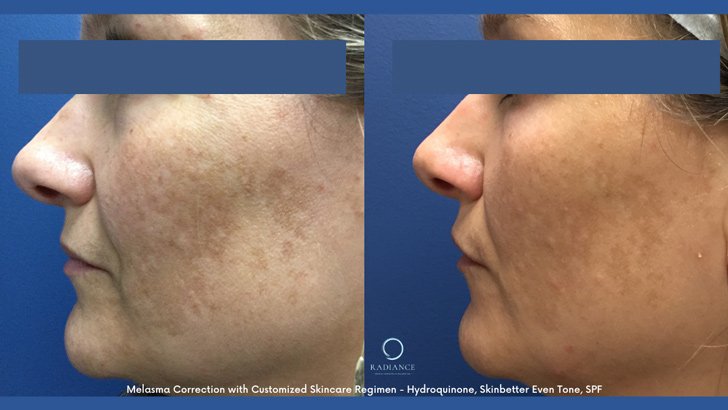
The word pigmentation covers a range of conditions. Melasma is a hormonal pigmentation condition that’s notoriously challenging to treat and requires a careful, staged approach. Post-inflammatory hyperpigmentation follows acne, injury, or previous skin treatments. Sun-induced pigmentation, including age spots and solar lentigines, results from UV exposure accumulating over years. Vascular pigmentation looks like discoloration but is actually caused by blood vessel changes under the skin. Each type responds differently to different treatments.
Getting an accurate assessment before treatment begins is essential. Treating melasma the same way you’d treat sun spots can make melasma significantly worse. Dr. Parker takes a careful diagnostic approach to pigmentation concerns before recommending any treatment, which is one of the reasons patients across Chittenden County trust Radiance for this type of work.
At Radiance, pigmentation treatment options include PICO Genesis, which uses ultra-short pulse laser energy to shatter pigment particles with precision and minimal heat damage to surrounding tissue. BBL Broadband Light targets surface-level pigmentation including sun spots and freckles across a broader area of the face or body. Chemical peels accelerate cell turnover and reduce the appearance of uneven tone over a series of treatments. For stubborn or complex pigmentation, the Halo hybrid laser addresses both superficial and deeper pigmentation simultaneously.
Medical-grade topical treatments play an important supporting role in pigmentation management. Products containing retinoids, vitamin C, azelaic acid, and specific brightening ingredients help maintain results between treatments and protect against new pigmentation development. Radiance carries skincare lines including Obagi Medical and Skinbetter Science that have strong clinical evidence behind their brightening formulations.
Sun protection is mandatory when treating any type of pigmentation. UV exposure is the primary trigger for most forms of hyperpigmentation, and any treatment results will fade quickly without consistent, adequate sun protection. This is something Dr. Parker addresses with every patient she sees for pigmentation at Radiance in Williston, VT.
The articles tagged Pigmentation on the Radiance blog cover how different types of pigmentation develop, why some types are harder to treat than others, how to evaluate whether a treatment is the right fit for your specific pigmentation concern, and what a realistic treatment timeline looks like. Managing expectations is as important as the treatment itself, and the content here is designed to help you understand what you’re committing to before you begin.
Vermont’s sun exposure patterns mean that pigmentation concerns often get worse over summer and improve somewhat in winter. The fall and winter months, when UV exposure is lower, are often the best time to start a treatment series for pigmentation. Dr. Parker helps patients in Williston, VT plan their treatment timing to get the most from their investment.
Patients from Burlington, South Burlington, Essex, Shelburne, Williston, and across Vermont have seen real results from pigmentation treatment at Radiance because the approach is precise, the technology is current, and the clinical oversight is thorough. Pigmentation concerns that have resisted over-the-counter products for years often respond well to the right clinical treatment when it’s selected and administered correctly.
If uneven skin tone or stubborn pigmentation has been affecting your confidence, start with the articles here and then book a consultation with Dr. Parker at Radiance Medical Aesthetics and Wellness Spa in Williston, VT.